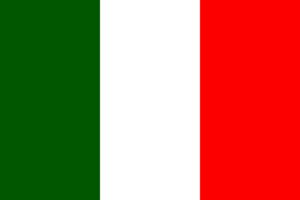
A Short History of the Italian Language
Italian is a Romance language that grew out of Latin. Today about 65 million people speak it. It is the official language of Italy, San Marino and Vatican City, and one of the four national languages of Switzerland. Large Italian-speaking communities also live in Argentina, the USA, Canada and Australia.
From Latin to Tuscan
For centuries, educated Italians wrote in Latin, while everyday life happened in dozens of local dialects. The first written traces of Italian appear in the 10th century. The real turning point came in 14th-century Tuscany, when Dante, Petrarch and Boccaccio wrote their masterpieces in the Florentine dialect instead of Latin. Their prestige made Tuscan the model for written Italian.
Setting the standard
After the printing press arrived, scholars argued fiercely over what “correct” Italian should be. In 1525 Pietro Bembo argued for the Tuscan of the great 14th-century writers, and his view won. The Accademia della Crusca, founded in Florence in 1582, published the first Italian dictionary in 1612.
A language for a nation
When Italy was unified in 1861, only a small minority actually spoke standard Italian. Writers such as Alessandro Manzoni, author of The Betrothed, helped shape a modern language based on Florentine. Schools, military service, and later radio and television spread it across the country.
Italian today
Most Italians now speak standard Italian alongside a regional variety or dialect, and expressive gestures are part of the conversation. Italian has given the world words like pizza, pasta, piano, opera and bank. In return, it keeps borrowing new words from English.
Sources: https://lex.dk/italiensk